Hello, I am

Nathan Steinle

And I'm an

working at the University of Manitoba in Canada experienced in Python-based pipeline development and quality-focused delivery across small and large collaborations to provide value-driven impact in cutting-edge projects. My expertise focuses on multi-messenger and multi-band studies of compact binaries, and bridges theoretical physics models with analysis of real datasets using big data and machine learning tools. I also have over 8 years of teaching in diverse environments and various age groups, from 5th graders and middle schoolers to high schoolers and university. Check out my google scholar page below, and feel free to contact me about new collaborations or any questions pertaining to astrophysics.

About Me

Astrophysicist!

Through my work as a professional astrophysicist, I discovered my passion for data science, machine learning, and scientific interpretation and prediction. As a postdoc I have extended this to a far-reaching expertise across astronomy and astrophysics focusing on data science applications in gravitational-wave astronomy. Ultimately, my passion for data science encourages me to explore all options and I am very eager to apply my analysis and machine learning skills to real-world problems in industry and everywhere. My international experience brings a wholesome and compassionate perspective to data science that focuses on student-led, team-oriented, and independent problem solving. Mentoring colleagues and students and collaborating on projects is a constant area of growth in my career; currently I lead/co-lead 7 collaborative projects, where 4 of them involve novel machine learning applications to real-world datasets involving students.

Read More

Skills

Python, Matlab, C++, Slurm/HTCondor, Latex, Linux, MacOS, Windows, Github/Gitlab

Data Science & Machine Learning

Teaching and Supervising diverse students in inclusive environments

Latest Project

  1. Deep learning for classification of black hole datasets in the mass--spin diagram (an analogue to the Hertzsprung-Russell diagram) with autoencoders in PyTorch and clustering algorithms in Sci-kit Learn
  2. Core development of a new framework for optimized inverse-Bayesian sampling with simulation-based calibration applied to highly complex datasets with X-ray astronomy PhD students in Manitoba
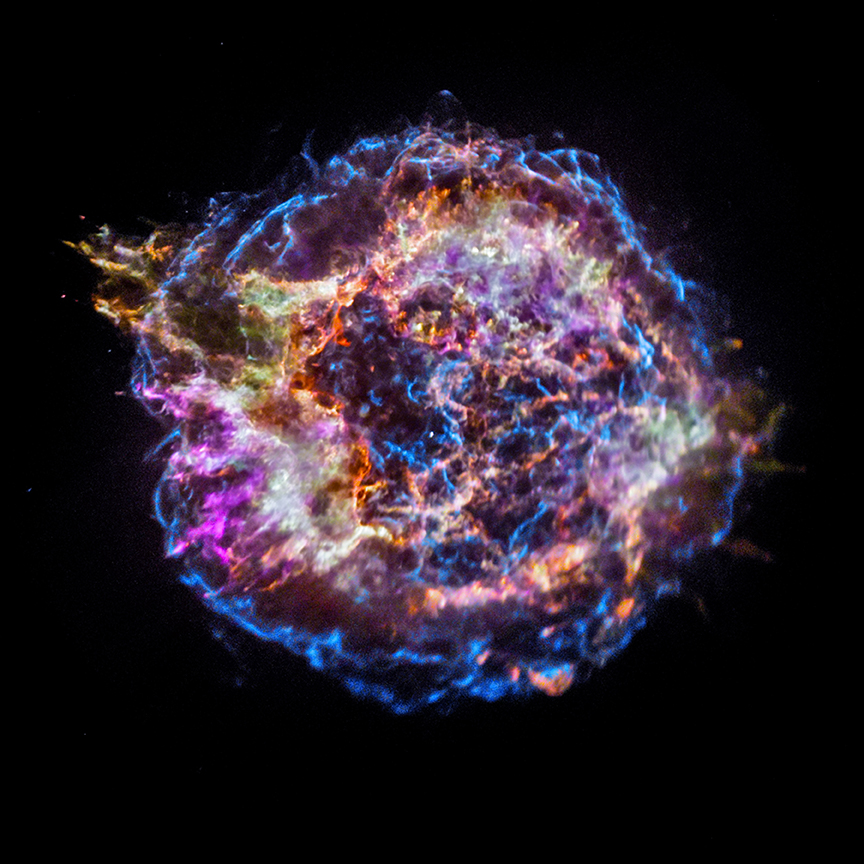
  3. Image classification of supernova remnant datasets which are sparsely populated, requiring advanced computer vision techniques, with PhD students in Manitoba
  4. Graph theoretic applications of Bayesian Networks and Factor Graphs for learning and regression of noisy, high-dimensional datasets in black-hole astrophysics with mathematics undergraduate and masters students

Contact Me!